

Discounts can be a fast way to drive clicks — but not always conversions. Many e-commerce advertisers on Meta platforms find that discounts don’t bring sustainable growth. In some cases, they hurt long-term margins, degrade audience quality, and confuse the ad algorithm.
This article breaks down why discounts fail in paid social campaigns and what to do instead to improve ad performance.
When discounts work — and when they backfire
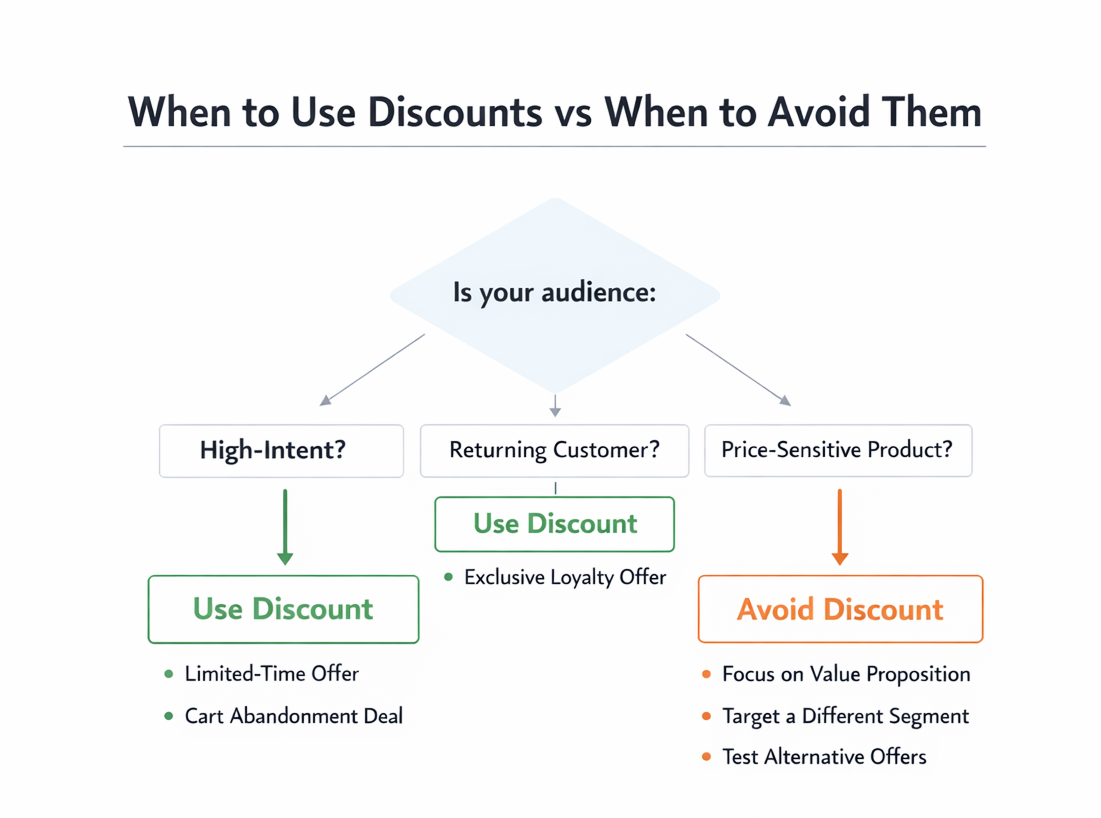
Discounts help when intent is already high
Discounts are most effective when a user is already considering a purchase. A small incentive can push them over the line. But only if you show the offer to the right audience.
Let’s break down three common situations where discounts convert well:
-
Cart abandoners: A 10% off ad sent to users who left items in their cart works as a timely nudge. These people know your brand and product.
-
Email subscribers: A welcome discount for new subscribers incentivizes first-time purchases while building a qualified list.
-
VIP segments: Loyal buyers may respond to private discount codes, especially when framed as a reward.
In these cases, the discount is not driving demand — it’s unlocking existing intent. This is a key distinction many advertisers miss.
Cold audiences often ignore discounts (or misuse them)
When you run cold campaigns offering 20–50% off, it may bring traffic — but not good customers. That’s because users who click for the discount are:
-
Not emotionally invested in the product or brand;
-
More likely to churn after one purchase;
-
Trained to wait for the next sale.
For example, one supplement brand ran a broad-targeted Facebook campaign offering “30% off first order.” CTR was strong, but 70% of buyers never came back. Their second campaign — focused on problem-solving benefits with no discount — drove fewer clicks but higher lifetime value.
Key takeaway: If users don’t already want the product, a discount won’t build real desire.
Why discount-based campaigns hurt more than they help
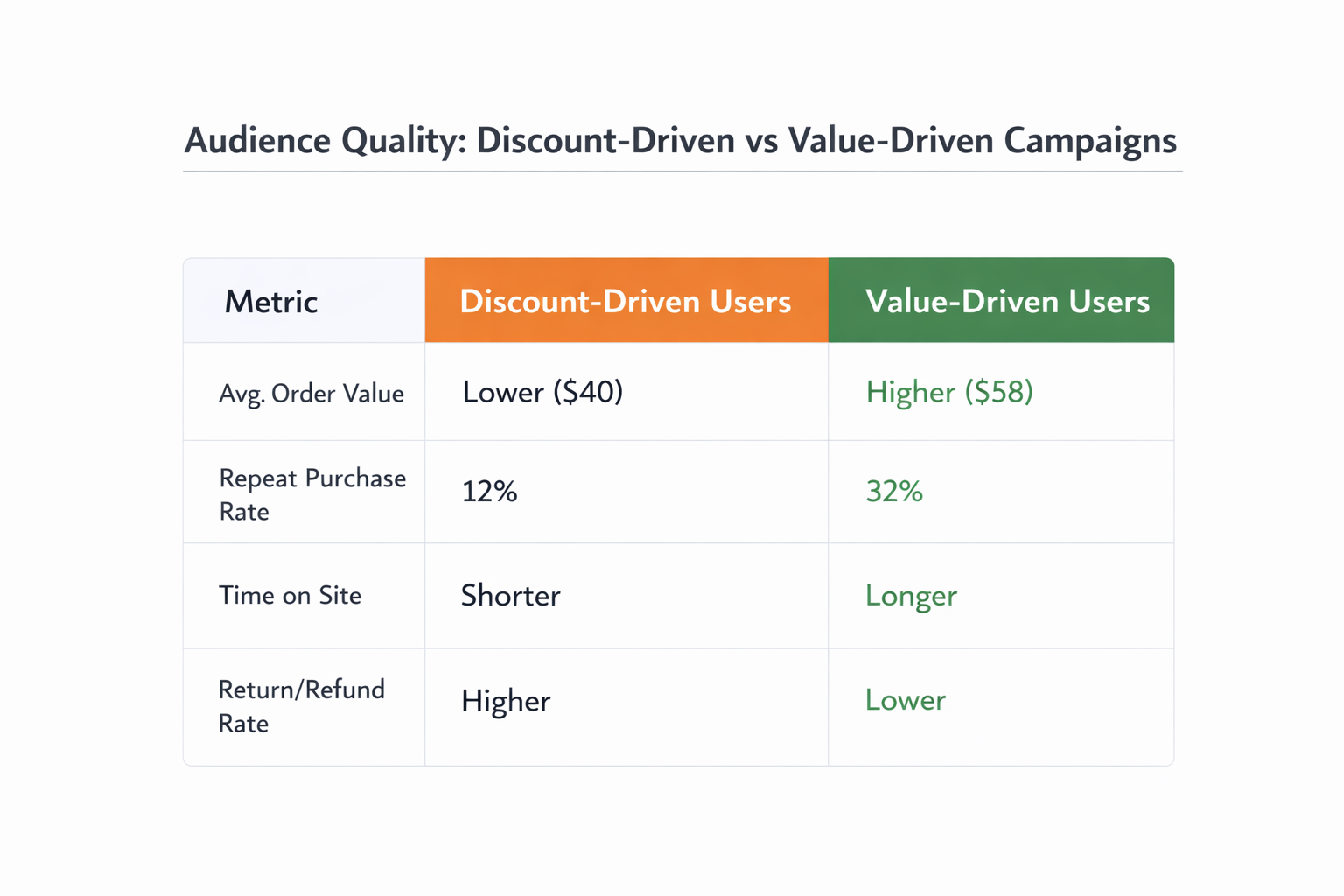
1. They damage brand perception
Constant sales make your full price look fake. Worse, it signals lower quality — especially for premium or niche products.
Use case: A DTC skincare brand used weekly discount ads to drive volume. Customers began treating full price as inflated. Their cost per acquisition dropped, but their average order value fell 28%. Worse, new product launches failed to gain traction without a promo.
This led the brand to rethink its positioning strategy. They shifted to value-first messaging, as explained in "How to Communicate Value Through Ads".
2. They confuse Meta’s algorithm
Big discounts can trigger short-term behavior spikes. This makes Facebook think your “ideal customer” is someone who only converts with deals.
When you go back to full-price campaigns, your results often tank. Meta's optimization system has to relearn what real conversion behavior looks like.
Case study: A home goods brand used a discount-heavy launch to train Meta. Their follow-up campaign with full-price creative had 50% higher CPMs and 30% lower ROAS.
This issue is covered in more depth in "Why Facebook Ads Stop Performing After Two Weeks and How to Fix It".
3. They scale losses instead of revenue
If you scale a discount-driven campaign, you may boost top-line revenue but lose money per customer.
Example: A fashion retailer offers “Buy 1 Get 1 Free.” Their AOV is $60, but fulfillment and product cost per unit is $35. At scale, they’re bleeding margin — even if ROAS looks acceptable.
Scaling without margins is a common trap. Learn how to avoid it in "How to Scale Facebook Ads Without Losing Profit Margin".
What to do instead of offering deep discounts
Elevate perceived value with stronger messaging
When people don’t convert, pricing is rarely the only issue. More often, they don’t yet understand the value of what you offer.
Here’s what to improve in your messaging:
-
Product comparisons: Show why your product is better than cheaper options.
-
Problem/solution framing: Lead with a specific problem and demonstrate how your product fixes it.
-
Social proof: Use testimonials, reviews, and user-generated content to build trust.
Instead of “30% OFF resistance bands,” try:
“Knees hurt from squats? These bands were designed by physical therapists to reduce joint stress — 4,800+ reviews.”
Target higher-intent audiences
You don’t have to discount when your ads reach people who already care.
Use case: A parenting brand used LeadEnforce to create audiences from people in Facebook groups like:
-
“First-Time Moms in Chicago”;
-
“Natural Baby Products”;
-
“NYC Moms Marketplace.”
These segments were closer to purchase. As a result, the brand reduced CAC by 27% and completely stopped running discount-based ads.
You can replicate this by learning "How to Build High-Performing Custom Audiences in LeadEnforce".
Test alternative offers that don’t devalue your product
Discounts aren’t the only way to make a product more appealing.
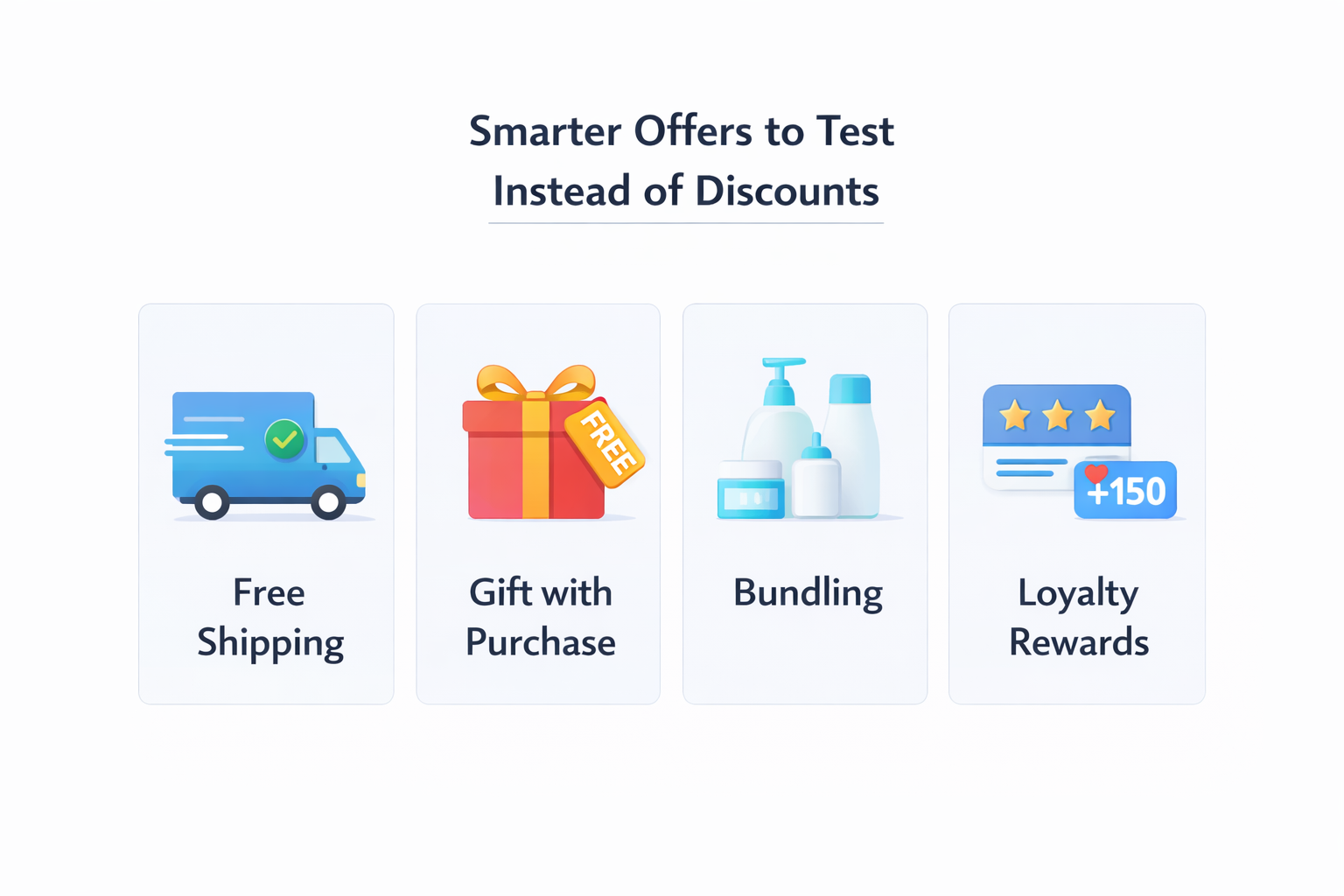
Consider these options:
-
Free shipping: Makes checkout feel easier and reduces cart abandonment.
-
Bundles: Increase AOV while offering savings without cutting perceived value.
-
Limited bonuses: Offer a free item with purchase (“Free bottle cleaner with all baby bottles”).
Example: A kitchen brand ran two ads:
-
“$20 OFF cookware set”
-
“Free heat-resistant gloves with every cookware order (today only)”
The second ad outperformed the first — with a 14% higher AOV and better ROAS.
For more tactical ideas, see "Why Emotional Storytelling Outperforms Discounts in Facebook Ads".
How to shift from discounts to sustainable growth
To reduce your reliance on discounting:
-
Audit your targeting
Replace broad interest targeting with group- and community-based audiences.
Try custom audience tools like LeadEnforce. -
Upgrade your creative
Build problem-led ads, use value-first offers, and reduce reliance on price-led CTAs. -
Check your margin math before scaling
Your CAC must fit within the AOV minus cost of goods, shipping, and returns — not just look good on paper. -
Track true profitability, not just ROAS
Ensure you’re measuring net revenue per campaign — not just click-throughs or front-end sales.
Final thoughts
Discounts aren’t inherently bad. But they’re not a fix for poor targeting, weak messaging, or unclear value.
When used with high-intent segments and clear objectives, they can convert fence-sitters. But when used broadly, they hurt more than help.
If you want to grow profitably on Meta, start with better targeting — not cheaper prices.
