

Digital marketing has made it possible to measure almost everything: impressions, clicks, scroll depth, micro-conversions, assisted conversions, engagement rates, and dozens more. While this level of visibility sounds like an advantage, it often leads to analysis paralysis. Teams spend more time interpreting numbers than acting on them.
Fewer metrics, chosen intentionally, improve focus. They make performance easier to understand, decisions faster to execute, and results more predictable over time.
The Hidden Cost of Tracking Too Many Metrics
Tracking excessive metrics doesn’t just clutter dashboards — it actively harms decision-making.
-
Conflicting signals: One metric improves while another declines, creating uncertainty about what action to take.
-
Delayed responses: Teams wait for "one more data point" before making changes.
-
Optimization noise: Minor fluctuations trigger unnecessary adjustments that destabilize performance.
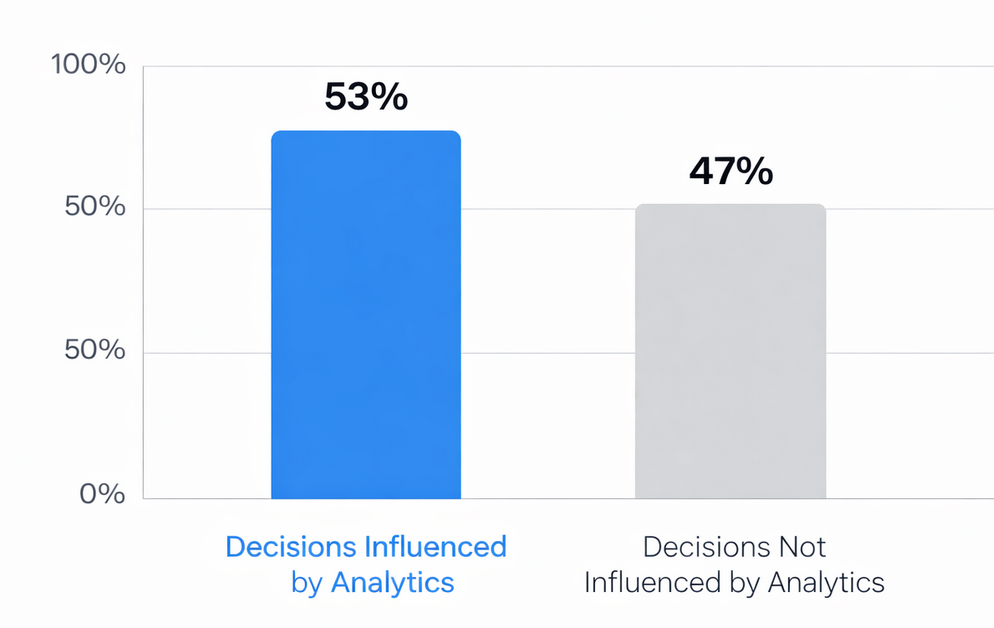
More than half of marketing decisions are influenced by analytics — showing the importance of focusing on the right metrics over data overload
According to industry research, marketing teams that focus on a small set of core KPIs are significantly more likely to report confidence in their decisions compared to teams tracking ten or more primary metrics.
Why Fewer Metrics Lead to Better Decisions
Strong decisions come from clear cause-and-effect relationships. When too many metrics are monitored, those relationships blur.
Simplified measurement frameworks work because:
-
They reduce cognitive load for decision-makers
-
Trends become easier to spot over time
-
Teams align around the same definition of success
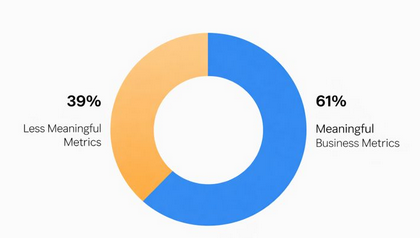
Only about 61% of reported marketing metrics in a large campaign review were tied to meaningful business outcomes, highlighting the cost of tracking too many irrelevant data points
A commonly cited benchmark in performance marketing shows that campaigns optimized around one primary efficiency metric and one volume metric outperform multi-metric optimization strategies in long-term stability.
The Core Metrics That Matter Most
While exact metrics depend on business model and channel, effective marketing decisions typically rely on a small hierarchy of measurements:
-
Primary outcome metric – revenue, qualified leads, or purchases
-
Efficiency metric – cost per acquisition or return on ad spend
-
Volume metric – conversions, leads, or sales count
-
Guardrail metric – frequency, reach, or saturation indicator
Limiting active optimization to these metrics keeps teams focused on what truly drives results.
Statistics That Support a Lean Metrics Approach
Data consistently shows the benefits of metric reduction:
-
Marketing teams using fewer than five core KPIs report faster decision cycles compared to teams tracking more than ten.
-
Campaigns optimized around cost efficiency and volume demonstrate lower performance volatility over time than campaigns frequently adjusted based on secondary engagement metrics.
-
Organizations that simplify reporting frameworks reduce unnecessary campaign changes, improving overall return consistency across quarters.
These patterns highlight that clarity, not complexity, is the real performance multiplier.
How to Reduce Metrics Without Losing Insight
Cutting metrics doesn’t mean ignoring data — it means organizing it.
Practical steps:
-
Separate reporting metrics from decision metrics
-
Assign one metric per decision type
-
Review secondary metrics on a fixed schedule, not daily
-
Avoid changing strategy based on short-term fluctuations
This structure ensures teams stay informed without reacting emotionally to normal performance noise.
Common Mistakes When Simplifying Metrics
Even with good intentions, teams often fall into these traps:
-
Removing metrics without defining clear replacements
-
Optimizing multiple "primary" metrics simultaneously
-
Changing success criteria mid-campaign
Successful simplification requires consistency and discipline, not just fewer numbers.
Conclusion: Clarity Scales Better Than Complexity
Better marketing decisions don’t come from more dashboards or deeper reports. They come from clarity, focus, and repeatable evaluation frameworks.
By selecting fewer metrics — and trusting them — teams move faster, reduce volatility, and build systems that scale without constant intervention.
