

Most campaigns are still treated as one-time launches: set up, run, and evaluate at the end. But modern digital marketing platforms generate feedback continuously. Campaigns that are structured to learn from this feedback can improve efficiency, relevance, and return on investment with every iteration.
According to industry benchmarks, advertisers who actively optimize campaigns based on performance signals see conversion rate improvements of 20–30% compared to static setups. Learning-driven campaigns shift optimization from a manual, reactive process into a systematic, ongoing advantage.
What Makes a Campaign "Learn"
A learning campaign is built around feedback loops. Instead of relying on assumptions, it uses real performance data to adjust targeting, messaging, and budget allocation over time.
Key characteristics include:
-
Continuous data collection across impressions, clicks, and conversions
-
Clear performance signals that guide optimization
-
Structured experimentation, such as A/B testing
-
Automation rules that respond to outcomes
When these elements are in place, each campaign cycle produces insights that improve the next one.
Start With Clean, Actionable Data
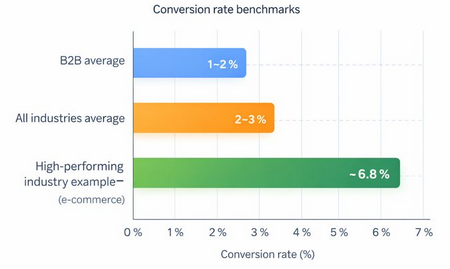
Conversion rate benchmarks across industries show typical campaign performance ranges and help define meaningful growth targets based on real campaign data
Learning depends on data quality. Inaccurate tracking or fragmented attribution prevents platforms from identifying what actually works.
Research shows that campaigns using consistent conversion tracking and unified attribution models achieve up to 25% lower cost per acquisition. To enable learning:
-
Track conversions that reflect real business value
-
Ensure attribution windows match buying cycles
-
Standardize naming and structure across campaigns
Clean data turns performance metrics into reliable learning signals.
Design Audiences That Can Evolve
Audience strategy is one of the strongest drivers of learning. Overly narrow targeting limits data volume, while overly broad targeting dilutes relevance.
High-performing campaigns often start with broader audiences and gradually refine them using engagement and conversion signals. Studies indicate that algorithms need at least 50–100 conversions per learning cycle to stabilize performance.
Effective audience learning strategies include:
-
Starting with core audiences large enough to generate volume
-
Layering behavioral or intent signals after initial learning
-
Periodically refreshing audiences to avoid saturation
This approach allows campaigns to adapt as user behavior changes.
Test One Variable at a Time
Learning requires controlled experimentation. Changing multiple variables at once makes it difficult to identify what caused performance shifts.
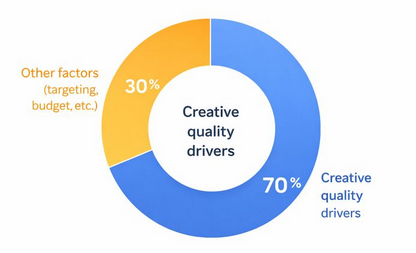
Creative quality contributes the majority share of effective campaign performance according to industry insights
Best practice testing frameworks show that campaigns using structured A/B testing outperform untested campaigns by an average of 15% in click-through rate.
To enable clear learning:
-
Test one element per experiment (creative, audience, or offer)
-
Run tests long enough to reach statistical significance
-
Document outcomes and apply winners systematically
Each test becomes a building block for future performance.
Use Automation With Guardrails
Automation accelerates learning, but only when rules are aligned with business goals. Automated budget shifts, bid adjustments, and pausing rules can reinforce successful patterns and limit wasted spend.
However, automation works best with constraints. Performance data shows that campaigns with defined thresholds and review intervals reduce budget volatility by up to 18%.
Effective guardrails include:
-
Minimum data thresholds before automated actions trigger
-
Clear performance benchmarks for scaling or pausing
-
Scheduled reviews to validate automated decisions
This balance keeps learning controlled and predictable.
Turn Insights Into Institutional Knowledge
A learning campaign should leave behind more than short-term results. Insights gained should influence future launches.
Organizations that document campaign learnings report faster optimization cycles and 10–20% shorter ramp-up periods for new campaigns. Simple practices include:
-
Maintaining a centralized log of tests and outcomes
-
Reusing proven structures and messaging frameworks
-
Applying historical benchmarks when launching new campaigns
Learning compounds when insights are preserved and reused.
Conclusion
Campaigns that learn over time outperform static campaigns because they adapt to real-world behavior. By focusing on clean data, flexible audiences, controlled testing, and structured automation, marketers can build systems that improve with every iteration.
Instead of asking whether a campaign worked, learning-driven teams ask what the campaign taught them—and how the next version can be better.
